What We Carry (Mozambique)
In central Mozambique, pregnancy is not carried by one person alone.
It moves through families, through memory, through systems that hold and sometimes fail.
It is carried in bodies, in silence, in stories not often spoken.
What We Carry is a collaborative film created with community members in Gorongosa. Through image, voice, and reflection, participants explore what it means to move through pregnancy and care—what is held, what is shared, and what is left unseen.
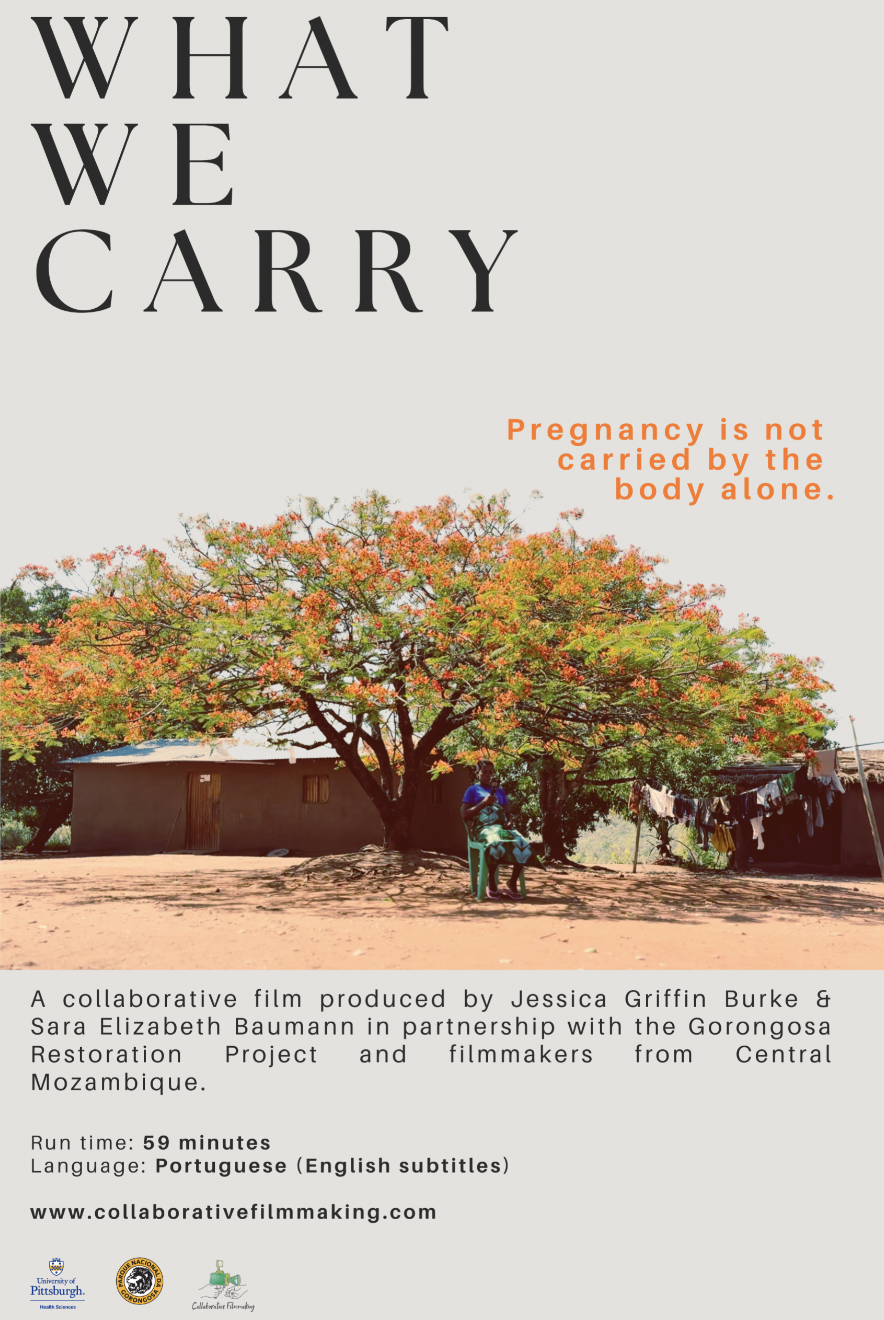
Watch the trailer here….
This film emerges from lived experience.
Participants came together to reflect on pregnancy, care, uncertainty, and strength. What unfolded was not a single story, but many—woven together through moments of waiting, hope, fear, and resilience.
What is carried is not only physical.
It is emotional. Social. Structural.
Pregnancy is not only a personal experience.
It is a moment where systems are tested.
In Gorongosa, what is carried includes distance, limited resources, and uncertainty about whether care will be there when it is needed. It includes decisions made in moments of urgency—when to walk, when to wait, when to hope help will arrive in time.
Improvement is not only about adding more services.
It is about strengthening the connections between them.
Care must move closer to where people live, to the realities they navigate every day.
Health systems must respond not only to clinical needs, but to the conditions that shape access: distance, resources, relationships, and understanding.
Change also requires listening.
When women and communities are seen as partners in shaping care, solutions become more grounded, more trusted, and more likely to endure.
What needs to change is not only infrastructure, but how care is designed, delivered, and experienced.
The pressures on health systems are growing.
Without change, gaps will widen between need and response, between communities and care.
With the right investments and partnerships, those same systems can become stronger, more connected, and more responsive.
The stories shared in What We Carry are reflections of what exists.
They also point toward what is possible.
How the Film Was Made
This film was created through a collaborative process.
Participants developed and shared their own stories, shaping the narrative through dialogue, reflection, and creative expression. The process created space to explore experiences that are often difficult to name and to see.
Collaborative Filmmaking is not only a method.
It is a way of listening.
A way of seeing what is often unseen.
A way of carrying stories forward.
What Emerged
Across the stories, certain threads became visible:
Care is relational.
It is shaped by trust, by presence, by who shows up in moments that matter.
Barriers are not only logistical.
They are felt—in waiting, in uncertainty, in the quiet spaces between need and response.
Pregnancy is deeply contextual.
It exists within families, communities, histories, and systems that shape what is possible.
Silence carries weight.
What is not said is often as important as what is spoken.
Where the Stories Traveled
What We Carry has moved well beyond the place it was created.
The film was shared at the January 2026 Sun Valley Summit in the United States, where government leaders, partners, and practitioners gathered to shape the future of the health system in central Mozambique. In that space, the stories carried by women and health workers in Gorongosa entered into direct dialogue with those responsible for planning, funding, and decision-making.
For the project participants, this mattered deeply. Knowing that their experiences, captured in their own voices, were seen and heard at that level brought a sense of pride and recognition. Their stories traveled, carrying with them the realities of care, the weight of constraint, and the strength of what already exists.
The film became a bridge connecting what is carried every day with the choices that shape what comes next.
From Film to Practice
The film continues to move.
When shared in communities it creates space for dialogue and reflection.
When used in training and engagement, it grounds conversations in lived experience.
It informs how care is understood, communicated, and designed.
In this way, the stories do not end with the film.
They continue to shape what comes next.